miércoles, 13 de abril de 2011

Bateria con limon

Batería de limón:

La batería de limón es un experimentos propuesto como proyecto en muchos libros de textos de ciencias. Consiste en insertar, en un limón, dos diferentes objetos metálicos, por ejemplo un clavo galvanizado y una moneda de cobre. Estos dos objetos trabajan como electrodos, causando una reacción electroquimica que genere una pequeña cantidad de electricidad.

El objetivo de este experimento es demostrar a los estudiantes cómo funcionan las baterias. Después de que la batería está ensamblada, se puede usar un multimetro para comprobar el voltaje generado. Para producir un efecto más visible, se puede usar la batería para dar energía a un LED. Puesto que el voltaje producido es típicamente insuficiente para encender un LED estándar, dos o más baterías son conectados en serie.

Técnicamente ocurren la oxidación y la reducción.

En el ánodo, el cinc (zinc) es oxidado:

Zn → Zn2+ - 2 e-

En el cátodo, se reduce el cobre:

Cu+++ 2e- → Cu

Un alternativa común a los limones son las patatas o a veces manzana. Cualquier fruta o vegetal que contenga ácido u otro electrolito puede ser usado, pero los limones se prefieren debido a su mayor acidez. Otras combinaciones de metales (como magnesio y cobre) son más eficientes, pero usualmente son usados el zinc y el cobre porque son razonablemente seguros y fáciles de obtener.

Usar una tira de magnesio en vez del zinc debe duplicar, aproximadamente, la corriente producida en la celda de limón (aproximadamente 240 µA con zinc y cerca de 400 µA con magnesio) y también aumenta levemente el voltaje (0.97 V con zinc y 1.6 V con magnesio). Estos números por supuesto dependen de los limones.

Una celda de batería de limón se hace con un limón y dos electrodos metálicosinca de diversos metales. La tecnología es creada por el hombre con el fin de satisfacer una necesidad, esta necesidad es la causa de la evolución de la tecnología. La tecnología se encuentra en una constante evolución y los objetos que no se adaptan simplemente desaparecen, es decir, a medida que las necesidades son mayores o digamos más complicadas se necesita crear un objeto que pueda llenar el vacio, el cual llega a reemplazar el anterior. En la práctica, una sola celda de limón es capaz de encender un bombillo.


Battery of lemon:

The lemon battery is experiments proposed like project in many text books of sciences. It consists of inserting, in a lemon, two different metallic objects, for example a galvanized nail and a copper currency. These two objects work like electrodes, causing an electrochemical reaction that generates a small amount of electricity. The objective of this experiment is to demonstrate to the students how the batteries work. After the battery is assembled, a multimeter can be used to verify the generated voltage. In order to produce a more visible effect, the battery can be used to give energy to a LED. Since the produced voltage is typically insufficient to ignite a standard LED, two or more batteries are connected in series.


Technically the oxidation and the reduction happen.


In the anode, the zinc (zinc) is oxidized:


Zn → Zn2+ - 2 e


In the cathode, the copper is reduced:


Cu+++ 2e- → Cu


A common alternative to the lemons is the potatoes or sometimes apple. Any fruit or vegetable that contains acid or another electrolyte can be used, but the lemons are preferred due to their greater acidity. Other metal combinations (as magnesium and receives) are more efficient, but usually the zinc and the copper are used because they are reasonably safe and easy to obtain. To use a magnesium strip instead of zinc must duplicate, approximately, the current produced in the cell of lemon (approximately 240 µA with zinc and near 400 µA with magnesium) and also increases slightly the voltage (0,97 V with zinc and 1,6 V with magnesium). These numbers by all means depend on the lemons. A cell of lemon battery takes control of a lemon and two electrodes metálicosinca of diverse metals. The technology is created by the man with the purpose of to satisfy a necessity, this necessity is the cause of the evolution of the technology. The technology is in a constant evolution and the objects that do not adapt simply disappear, that is to say, as the needs are majors or we say more complicated it needs to create an object that can fill the emptiness, which gets to replace the previous one. Actually, a single cell of lemon is able to ignite a small pump.


miércoles, 12 de enero de 2011

DERECHOS DE LOS ANIMALES:


derechos de los animales:

Se conoce como derechos de los animales a las ideas postuladas por corrientes de pensamiento y a la subcorriente del movimiento de liberación animal que sostienen que la naturaleza animal es un sujeto de derecho, cuya novedad reside en que esta categoría sólo ha pertenecido a personas naturales y juridicas, es decir al ser humano.

Los animales humanos siempre han reconocido a ciertos animales no-humanos una consideración especial (ej.domesticacion), que varía mucho según el entorno cultural o el lugar, desde apoyar que se pueda utilizar a los animales no-humanos según plazca o sirva al humano, pasando por el trato ético o el bienestar animal, hasta considerar que existe una discriminación especista hacia los animales no-humanos y que por lo tanto estos merecen derechos tradicionalmente reconocidos sólo a los animales humanos.

No debe confundirse con el derecho de animales como doctrina jurídica, marco jurídico de algunos países donde el objeto de Derecho es la libertad de conducta de los animales en su ambiente natural y el trato que reciben en un hábitat humano.

derechos de los animales en la antigüedad:

La idea según la cual sería aceptable que los animales puedan ser explotados por los humanos para comida, vestido u otras razones proviene básicamente de tres fuentes principales:

  1. La costumbre de muchos pueblos de las primeras etapas de la vida humana en la Tierra de conseguir comida de la caza y la pesca y, posteriormente, de la ganadería.
  2. El concepto teologico de dominio basado en el Génesis (1:20-28) donde es dado a Adán el dominio sobre el mundo no humano.
  3. La suposición de que los animales no pueden poseer derechos porque no tienen capacidades como razonamiento, lenguaje o conciencia.

derechos de los animales en la edad moderna:

Los derechos de los animales son un tema controvertido, debido a que no existe consenso sobre los mismos, ni acuerdos internacionales al respecto. Según descartes, los animales ni siquiera son capaces de sentir dolor; lo que se debe, supuestamente, a que carecen de alma: De este modo, los animales estarían fuera del alcance de la consideración moral. Por otro lado Nicolás Fontaine, un testigo presencial, describió en sus memorias, publicadas en 1738, una visita a un laboratorio: Se les administraban golpes a perros con bastante indiferencia y se burlaban de quienes se compadecían de los perros.

La idea de no causar sufrimiento innecesario a los animales como un deber, se puede asociar con facilidad a la teoría ética de contractualismo; corriente surgida a finales del siglo XVIII.

Las primeras sociedades de "protección animal" se crearon durante la revolución industrial y las primeras víctimas defendidas fueron las que efectuaban la llamada "tracción a sangre", es decir, caballos, asnos y mulas, cuyo maltrato era habitual y a la vista de todos.


animales en extinción:

En términos biológicos, se considera a la extinción como un fenómeno completamente natural resultado de un proceso en el que una especie se origina a partir de otra -la que se extingue-, lo cual ocurre generalmente en el lapso de varios miles o varios cientos de miles de años


animal en extinción en Venezuela:

EL CÓNDOR:


Se encuentra a lo largo de los Andes, y en Venezuela se puede encontrar específicamente en la Cordillera Andina y en la Sierra de Perijá. El más imponente ave de los Andes americanos es el Cóndor (Vultur gryphus) que pertenece al orden de los Falconiformes y a la familia Cathartidae cuyos miembros son caracterizados por alimentarse casi exclusivamente con carroña.

El Cóndor es un ave grande monógama y sedentaria con ciertos hábitos nocturnos. Su cabeza es desnuda de plumas y el macho se diferencia fácilmente de la hembra por su cresta o carúncula que lleva sobre la frente y parte del pico; además el macho es de mayor tamaño y tiene el iris del ojo de color marrón amarillento mientras que el de su compañera es rojizo; su visión es realmente extraordinaria.

Su pico es recio con gancho apical y bordes cortantes; tiene un voluminoso buche que destaca al llenarse; tiene patas bastante robustas, dedos fuertes pero con uñas romas relativamente débiles. Su plumaje de joven es de color pardo ocráceo y de adulto es por lo general de color negro azulado y ostenta un collar de plumón blanco y grandes manchas también blancas en los extremos de las alas.

Un macho adulto puede llegar a pesar unos 12 kilos y medir desde el extremo del pico al extremo de la cola 1.30 metros; su envergadura en vuelo puede alcanzar 3.50 metros y volar sobre unos 7000 metros de altura y en condiciones climáticas favorables mantener el vuelo durante cierto tiempo a unos 55 Km/hora.


rights of the animal:

Animal knows itself like rights of the animal the ideas postulated by currents thought and the subcurrent of the liberation movement that maintain that the nature animal is a right subject, whose newness resides in which this category has only belonged to natural and legal people, that is to say to the being humano.1 The human animal always have recognized certain not-human animal a special consideration (ex. domestication), that varies much according to the cultural surroundings or the place, from supporting that it is possible to be used to the not-human animal according to it pleases or it serves the human, happening through the ethical treatment or the well-being animal, until considering that a especista discrimination exists towards the not-human animal and which therefore these traditionally deserves rights recognized only the human animal. It does not have to be confused with the animal right as it indoctrinates legal, legal frame of some countries where the object of Right is the freedom of conduct of the animal in its natural environment and the treatment that receive in a human habitat.


rights of the animal in the antiquity:

The idea according to which it would be acceptable that the animal can be operated by the humans for food, dress or other reasons comes basically from three main sources: The custom of many towns of the first stages of the human Earth life to secure to food of the hunting and the fishing and, later, of the cattle ranch. The theological concept of Dominion based on Genesis (1: 20-28) where the dominion on the nonhuman world is given to Adam. The supposition of which the animal cannot own rights because they do not have capacities like reasoning, language or bring back to consciousness.


rights of the animal in the modern age:

The rights of the animal are a controversial subject, because does not exist consensus on the same, nor international agreements on the matter. According to Discardings, the animal not even are able to feel pain; what it must, supposedly, to that they lack soul: In this way, the animal would be outside the reach of the moral consideration. On the other hand Nicholas Fontaine, an eyewitness, described in his memories, published in 1738, a visit to a laboratory: Blows to dogs with indifference were administered to them enough and they made fun of of those who felt sorry themselves of the dogs. The idea of not causing unnecessary suffering to the animal as to have, it is possible to be associated with facility to the ethical theory of contractualismo; current arisen at the end of century XVIII. The first societies of " protection animal" they were created during the industrial revolution and the first victims defended were those that carried out the call " traction to sangre" , that is to say, horses, asses and mules, whose I mistreat was habitual and in view of all.


animal in extinction:

In biological terms, natural result of a process is considered completely to the extinction like a phenomenon in which a species originates from another one - the one that is extinguished, which happens generally in the lapse of several thousand or several hundreds of thousands of years.


animal in extinction in Venezuela:

THE CONDOR:

One is throughout the $andes, and in Venezuela it is possible to be found specifically in the Andean Mountain range and the Mountain range of Perijá. The most imposing bird of American the $andes is the Condor (Vultur gryphus) that belongs to the order of the Falconiformes and to the Cathartidae family whose members are characterized to feed itself almost exclusively with carrion. The Condor is a monogamous and sedentary great bird with certain habits nocturnes. Its head is naked of pens and the male difference easily of the female by its crest or carúncula that takes on the forehead and part of the tip; in addition the male is larger and has the rainbow of the eye of yellowish brown color whereas the one of its companion is reddish; its vision is really extraordinary. Its tip is strong with apical hook and sharp edges; it has a voluminous crop that emphasizes when filling; it has quite robust legs, strong fingers but with relatively weak Rome nails. Its plumage when younger is of ocráceo brown color and of adult it is generally of bluish black color and shows a white necklace of plumón and great also white spots in the ends of the wings. An adult male can arrive about 12 kilos even though and measure from the end of the tip to the end of the tail 1,30 meters; its spread in flight can reach 3,50 meters and fly on about 7000 meters of height and in favorable climatic conditions to maintain the flight during certain about 55 time to Km/hora.


H.I.V/AIDS


¿Que es el SIDA?


lo primero que hay que saber de la infección por el Virus de

lnmunodeficiencia Humana (VIH) -en inglés se llama HIV-. Por eso lo

correcto es hablar de la infección VIH-SlDA sabiendo que es un proceso.

Este virus deja sin defensas al organismo: concretamente mata a las

células encargadas de defendernos de las enfermedades. Puede afectar a

cualquier persona que no tome medidas preventivas y, por el momento, es

incurable.

Se ha demostrado científicamente que los contactos de la vida cotidiana

no transmiten el VIH: no se transmite por abrazar, besar, compartir vasos

y cubiertos, tomar mate o intercambiar ropa con una persona infectada;

tampoco por compartir el lugar de trabajo o salón de clase, utilizar el

mismo baño o pileta que ella; lavarla o dormir en su misma cama. Los

insectos no lo transmiten; el sudor, o las lágrimas de quienes padecen

esta infección tampoco. En una palabra, querer y apoyar a una persona

infectada no trae riesgos; al contrario, tiene efectos positivos en su

salud y en quienes le rodean.

Los que rechazan y discriminan a los portadores del VIH-SIDA ignoran las

verdaderas características de la enfermedad. Estar informado sobre los

modos en que sí se transmite es el primer paso para la prevención.

¿CÓMO SE TRANSMITE?


Las tres formas o vías de transmisión son:

1) Transmisión sexual

A través del intercambio de semen y secreciones vaginales, durante todo

tipo de relación sexual con una persona infectada por el VIH, sin

preservativo.

2) Transmisión sanguínea

Cuando la sangre de una persona infectada por el VIH se pone en contacto

con nuestra sangre.3) Transmisión madre-hijo

Las mujeres infectadas pueden transmitir el virus a su hijo mientras está

en el vientre, en el momento del parto, o durante la lactancia.

¿QUÉ DIFERENCIA HAY ENTRE VIH Y SIDA?


Como ya se dijo, el SIDA es una etapa avanzada de la infección que

produce el VIH. Por eso, podemos estar infectados por el VIH -o sea, ser

portadores del virus- y, todavía, no haber desarrollado el SIDA. Desde

que el virus entra en el cuerpo hasta que aparecen los síntomas pueden

pasar muchos años (si se realiza tratamiento temprano, más aún).

Justamente, la palabra SIDA significa Síndrome de Inmuno Deficiencia

Adquirida. Es decir que uno ha desarrollado el SIDA cuando presenta un

conjunto de signos y síntomas (Síndrome) que indican que sus defensas

están disminuidas (Inmuno Deficiencia) porque se contrajo el virus

(Adquirida).

Cuando se llega a esta etapa aparecen las llamadas "enfermedades

oportunistas", que se desarrollan aprovechando la caída de las defensas.

Las más frecuentes son las afecciones pulmonares, de la piel, y diversos

tipos de cáncer. A ello se suman los efectos directos del virus en el

organismo, que incluyen trastornos del sistema nervioso y el aparato

digestivo. Cuando la persona que vive con VIH desarrolla estas afecciones

se la considera enferma de SIDA.

¿EXISTEN PORTADORES SANOS?


No. Las personas a las que se suele llamar "portadores sanos" son, en

realidad, "portadores asintomáticos", es decir que no presentan aún los

síntomas del SIDA pero, son personas que viven con VIH.

Esto significa que pueden transmitir el virus, y que tiempo después

contraerán la enfermedad.

Es muy importante tener presente que hay estudios para saber si uno está

infectado, lo que permite tomar medidas para no infectar a otra persona,

e iniciar tempranamente los tratamientos.

¿CÓMO SABER SI UNO CONTRAJO EL VIRUS?


Si creemos haber estado realmente en alguna situación de riesgo, porque

mantuvimos relaciones sexuales sin profiláctico con alguien que no

sabemos si está infectado, o compartimos una jeringa, o recibimos una

transfusión no debidamente controlada y deseamos averiguar si estamos

infectados o no, es posible recurrir al centro de salud u hospital

público más cercano, o a un médico particular, para realizar los estudios

correspondientes.

Las primeras pruebas que suelen hacerse (Elisa, Western blot, etc.)

sirven para detectar los anticuerpos generados por el organismo para

defenderse del VIH. Si hay anticuerpos, hay virus. Hay una primera etapa

de la infección, alrededor de tres meses, en que la cantidad de

anticuerpos generados por el organismo no es detectable por las pruebas -

es el llamado "período ventana"-, por lo que se recomienda, si da

negativo, volver a hacerlo tres meses después para confirmar el

resultado.

No se deben confundir estas pruebas con las de "carga viral", que miden

la cantidad de virus presente en la sangre y no se utilizan para el

diagnóstico sino para supervisar el tratamiento de los pacientes con VIH

o SIDA.

Es importante saber que, por ley nacional, los profesionales médicos o

cualquier otra persona que por su ocupación se entere de que alguien es

portador del VIH o está enfermo de SIDA, tienen prohibido revelar dicha

información públicamente.

¿ES POSIBLE TRATAR LA ENFERMEDAD?


Sí, hay tratamientos que, aunque no eliminan el virus, tienden a detener

su multiplicación y a frenar la destrucción de las células productoras de

defensas. Por lo tanto retrasan el comienzo de las enfermedades.

En los últimos años, estos tratamientos han progresado mucho logrando una

mejor calidad de vida de los pacientes. Sin embargo, dado que su

aplicación es muy reciente, no se pueden hacer pronósticos a largo plazo.

Las leyes nacionales establecen que, en los hospitales públicos, las

obras sociales y las prepagas médicas se deben brindar estos tratamientos

sin costo adicional alguno.

¿EXISTE UNA VACUNA?


Desgraciadamente, la investigación referida a la vacuna anti-VIH no

avanza con la misma rapidez que la de los tratamientos. Es muy complicado

por la cantidad y tipo de pruebas que requiere. Además, dado que el virus

va cambiando (mutando), no se puede afirmar que la vacuna lograda sea

totalmente útil en el momento de su aplicación.

Por lo tanto, la prevención es la única herramienta con que contamos en

la actualidad para no infectarnos ni infectar.

¿PREVENCION?


* usar preservativo.

* ir a un control continuamente.

* tener relaciones sexuales sanas.

That it is AIDS?

First that there is to know it is that AIDS is a stage outpost of the infection by the Virus of lnmunodeficiencia Humana (VIH) - in English HIV- is called. For that reason the correct thing is to speak of infection HIV-SlDA knowing that it is a process. This virus leaves without defenses the organism: concretely it kills the cells in charge to defend to us of the diseases. It can affect any person who does not take preventive measures and, at the moment, is incurable. One has demonstrated scientifically that the contacts of the daily life do not transmit HIV: it is not transmitted to embrace, to kiss, to share glasses and places setting, to take mate or to interchange clothes with an infected person; to share the place of work or hall class, either to use the same bath or sink that she; to wash it or to sleep in its same bed. The insects do not transmit it; the sweat, or the tears of those who do not suffer this infection either. In a word, to love and to support an infected person do not bring risks; on the contrary, it has positive effects in its health and in those who surrounds to him. Those that they reject and they discriminate against the carriers of the VIH-SIDA ignore the true characteristics of the disease. To be informed on the ways in which yes it is transmitted is the first passage for the prevention. HOW IT IS TRANSMITTED? The three forms or channels are: 1) Sexual transmission Through interchange of semen and vaginal secretions, throughout type of sexual relation with a person infected by HIV, without preservative.

2) Transmission blood
When blood from an HIV infected person comes in contact
with our blood.

3) mother-child transmission
Infected women can transmit the virus to her child while
in the womb at the time of delivery, or breastfeeding.

WHAT IS THE DIFFERENCE BETWEEN HIV AND AIDS?

As noted, AIDS is an advanced stage of infection
HIV occurs. Therefore, we can be infected by HIV-that is, be
carriers of the virus-and still have not developed AIDS. From
that the virus enters the body until symptoms appear can
take years (if performed early treatment even more).
Precisely, the word "AIDS" means Acquired Immune Deficiency
Acquired. This means that one has developed AIDS when it presents a
set of signs and symptoms (syndrome) that indicate that their defenses
are welcome (Immune Deficiency) because the virus was contracted
(Acquired).

When you reach this stage appear-called "diseases
opportunistic ", which are developed taking advantage of the fall of the defenses.
The most common are lung, skin, and various
cancers. This is compounded by the direct effects of the virus in
body, including nervous system and apparatus
tract. When the person living with HIV develops these conditions
is considered to be ill with AIDS.

ARE THERE HEALTHY CARRIERS?

No. The people who are often called "healthy carriers" are in
Actually, "asymptomatic carriers", ie have not yet
symptoms of AIDS but are people living with HIV.
This means they can transmit the virus, and after
contract the disease.
It is very important to note that no studies of whether one is
infected, allowing measures to avoid infecting someone else,
and initiate early treatment.

HOW TO KNOW IF ONE CONTRACTED THE VIRUS?

If we have actually been in a situation of risk because
had sex without a condom with someone who
know if you are infected, or share a needle, or receive a
transfusion is not well controlled and we find out if we
infected or not, it is possible to use the health center or hospital
nearest public or a private doctor to conduct studies
concerned.
The first tests are usually performed (ELISA, Western blot, etc.).
used to detect the antibodies produced by the body to
defend themselves from HIV. If antibodies, viruses. There is a first step
of infection, about three months, the number of
antibodies generated by the organism is not detectable by the tests -
is called "window period" - and therefore recommended, if da
negative, do it again three months later to confirm the
result.
Do not confuse these tests with the "viral load" sizes
the amount of virus in the blood and are not used for
diagnosis but to monitor the treatment of HIV patients
or AIDS.
Importantly, by national law, medical professionals or
any other person who by his occupation he hears that someone is
HIV positive or sick with AIDS, are prohibited from disclosing such
information publicly.

IS IT POSSIBLE TO TREAT THE DISEASE?

Yes, there are treatments, but not eliminate the virus, they tend to stop
multiplication and stop the destruction of cells producing
defenses. Therefore delay the onset of disease.
In recent years, these treatments have made great progress achieving
better quality of life of patients. However, since its
application is very recent, you can not make long term forecasts.
National laws provide that, in public hospitals,
social work and insurance companies must provide such medical treatment
no additional cost.

Is there a vaccine?

Unfortunately, research regarding HIV vaccine not
progressing as fast as the treatments. It is very complicated
the amount and type of tests required. In addition, since the virus
is changing (mutating) can not be said that the vaccine is successful
totally useful at the time of application.
Therefore, prevention is the only tool we have in
Currently Non-infected or infected.

Prevention?

* Use a condom.

* Go to a continuously control.

* Have healthy sexual relationships.

viernes, 12 de noviembre de 2010

Friends of the Earth

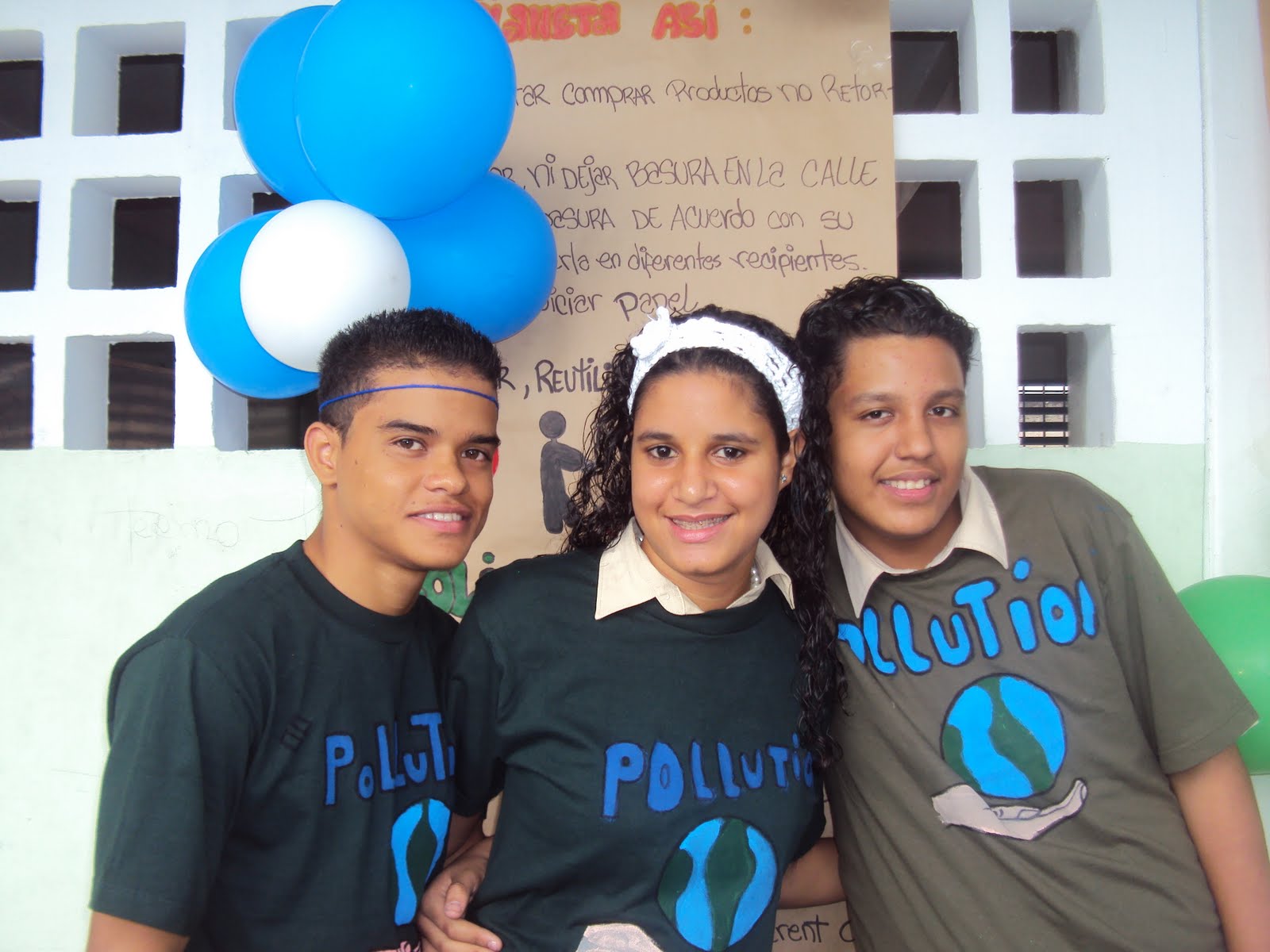
Contaminación de Residuos Sólidos

El concepto de residuos sólidos incluye una amplia y variada gama de
objetos utilizados por los hombres en la vida doméstica y las relaciones
social y dispuesto a ser de ninguna utilidad para cumplir con
fines para los que estaban destinados.

Creemos que toda esa basura que una vez que ya no se utiliza
sirve. De todos los productos que comemos siempre dejar un poco de
y eliminación de residuos.

Los residuos sólidos se pueden clasificar según su origen, de acuerdo a sus
propiedades físicas o las propiedades que tienen el
destruir los microorganismos o no.

Por origen distingue a los grandes grupos:

los residuos sólidos municipales.

Estos residuos presentan una gran variedad, que, debido a
número de personas que lo producen a ser uno de los
los contaminantes más grandes que tiene la ciudad de Santiago. Esto puede
observada en los distritos como nivaje, la cuenca del caimito, etc

Residuos sólidos industriales.

Estos suelen ser los más tóxicos y debido a las cantidades
afectan a la industria produjo una mayor proporción causada por
mala gestión de los residuos de las industrias, como la
industria de la carne, curtiembres y otros, causando grandes
las condiciones ambientales (suelo, agua, aire, etc.)

Agrícola de residuos sólidos.

Estos si son los que causan un menor impacto, todavía son
importante porque no sólo destruye el suelo, pero el resultado
difíciles de reciclar debido a la alta toxicidad contra insectos
poseen. Este tipo de residuos se pueden encontrar en los cultivos en
la periferia de la ciudad de Santiago y Moca, Licey, etc

Por sus cualidades físicas se obtienen:

Los materiales inertes (metales, vidrio, tierra, cenizas, etc.)

Estos son los menos en lo que respecta a los residuos de material
combustibles, pero los residuos de vidrio se producen una gran cantidad, debido a
bienes de consumo que presenta este material. Podemos darnos cuenta de esta
debido a las muchas botellas que compramos todos los días y vemos en las tiendas de comestibles y
supermercados.

Los materiales combustibles (papel, cartón, plásticos, madera, caucho, etc.)

Estos residuos se producen en cantidades industriales que están
la mayoría son consumidos por la mala suerte o falta de conciencia, el plástico es
uno de los más dañinos y más utilizados. Se encuentra en
por todas partes en la oficina, escuelas, casas, etc

Para las propiedades que tienen o matar a los microorganismos
No se clasifican en:

Los residuos biodegradables.

Los desechos se descomponen por la acción de microorganismos tales como
los residuos animales y plantas. Estos causan menos impacto
medio ambiente, ya que servirá también para descomponer las proteínas. Si
fácil de encontrar en las granjas y los animales de cría como las vacas,
las aves de corral, cerdos, etc por la mediación de Moca, Villa González, Licey
Matanzas, etc

Los desechos no degradables.

Son aquellos que no son destruidas por la acción de microorganismos. Son los
causar más daños al medio ambiente y el presente en grandes cantidades.

Es posible una clasificación mixta de acuerdo a su
origen y sus cualidades físicas, tales como residuos en la vivienda no
de combustible.

Todas las provincias desarrolladas o en desarrollo se enfrentan
este problema y el corazón de la ciudad es uno de ellos, y cuanto más
personas que no tienen conciencia de residuos cada vez mayor en el
daños.

Solid Waste Pollution

The concept of solid waste includes a wide and diverse range of
objects used by men in domestic life and relationships
social and disposed to be of no use to comply with
purpose for which they were intended.

We believe all that garbage that once we no longer used
serves. Of all the products we eat we always leave some
and waste disposal.

Solid waste can be classified according to their origin, according to their
physical properties or as properties that have the
destroy microorganisms or not.

By origin distinguishes the major groups:

Municipal solid waste.

These residues present a great variety, which, due to
number of people who produce it out to be one of the
contaminants larger than has the city of Santiago. This can
observed in the districts as nivaje, the basin of star apple, etc.

Industrial solid waste.

These are usually the most toxic and because of the quantities
affect industrial produced a higher proportion caused by
poor waste management in industries, such as the
meat industries, tanneries and other, causing large
environmental conditions (soil, water, air, etc.).

Agricultural solid waste.

These though are the ones that cause less impact, they are still
important because they not only destroy the soil, but result
difficult to recycle due to high toxicity against insects
possess. This type of waste can be found in the crops in
the periphery of the city of Santiago and Moca, Licey, etc.

By their physical qualities are obtained:

Inert materials (metals, glass, dirt, ashes, etc.).

These are the least with regard to waste material
fuels, but wastes a lot occurring glass, because of
consumer goods that this material presents. We can realize this
because of the many bottles we buy every day and we see in grocery stores and
supermarkets.

Combustible materials (paper, cardboard, plastics, wood, rubber, etc.).

These wastes are produced in industrial quantities that they are
most are consumed by bad luck or lack of awareness, the plastic is
one of the most harmful and most used. It is found in
everywhere in the office, schools, houses, etc.

For properties that have or kill microorganisms
not be classified as:

Biodegradable waste.

Wastes are decomposed by the action of microorganisms such as
animal waste and plants. These cause less impact to
environment because this will serve as protein to decompose. Are
easy to find on farms and breeding animals such as cows,
poultry, pigs, etc. by the mediation of Moca, Villa Gonzalez, Licey
Matanzas, etc.

Non-degradable waste.

Are those that are not destroyed by the action of microorganisms. Are those
cause more damage to the environment and present in larger quantities.

It is possible a mixed classification according to their origin and their
physical qualities, such as residues in non-housing
fuel.

All the provinces developed or developing face
this problem and the city heart is one of them, and the more
people without conscience have greater and greater waste at the
damage.